
Skin cancer is one of the most common forms of malignancy. There are two main types of skin cancer: melanoma and non-melanoma (basal cell, squamous cell, and sebaceous gland carcinoma). The prevalence of skin cancer in the Middle East is on the rise. In Saudi Arabia, 9.9 percent of the population is at risk of developing skin cancers. It is more common in men than women, and most cases are in the 61-80 age group.
Squamous cell and basal cell carcinomas are the most common types of skin cancer in Saudi Arabia. Malignant melanomas, which are the types of skin cancer that spread to other organs and result in death — are less common.
Incidence and Distribution of Skin Cancers
Squamous cell carcinoma (41.1 percent) is the most common skin cancer diagnosis in Saudi Arabia, followed by basal cell carcinoma (26.3 percent). The parts most often affected are the head and neck (55.4 percent). These cancers also occur in the lower limbs (16.6 percent), trunk (13.6 percent), upper limbs (8.2 percent), and pelvic area (2.3 percent).
Recognizing the Signs of Skin Cancer
Skin cancers are easier to diagnose than deep-seated malignancies.
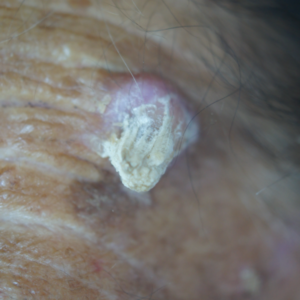
Squamous cell carcinoma looks like warts that crust and sometimes bleed. This cancer can also appear as red patches on the skin, open sores that don’t heal for weeks, or an elevated growth that grows rapidly.
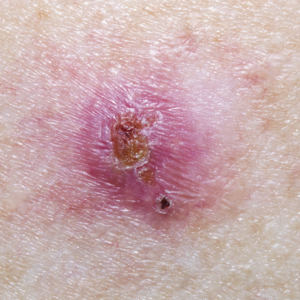
Basal cell carcinoma manifests as a persistent, non-healing sore, a reddish patch or irritated area, a pink growth, or scarring.
Screening for Skin Cancer
Only 55 percent of people in Saudi Arabia know about skin cancer and sun-protective practices are rarely followed. Screening for skin malignancies is crucial because early diagnosis and treatment can save lives. Examining the skin under bright light helps diagnose these malignancies.
It is recommended to have a yearly skin examination. The entire body should be examined since 20 percent of cancers occur in areas not exposed to the sun. The patient should remove all makeup before the skin examination.
If you see moles, spots, or growths on the skin, consider cancer a possibility. Look for these ABCDE signs of cancer:
- Asymmetry: The two halves of a mole don’t match.
- Borders: Cancer lesions have uneven, scalloped, or notched borders.
- Colour: Cancerous lesions are multicoloured (brown, black, blue, and red).
- Diameter: Moles greater than 6 mm in size are suspicious.
- Evolution: Changes in size, shape, colour, and height indicate cancer, as do new symptoms like itching, bleeding, and crusting.
If suspicious lesions are found during an examination, the patient should be referred to a dermatologist who can decide if a diagnostic biopsy is necessary.
May is Skin Cancer Awareness Month in Saudi Arabia and around the globe, and clinicians should use the opportunity to raise awareness about these malignancies and popularize skin safety.
Uncover Insights on Skin Cancer
MDBriefCase provides continuing medical education (CME) programs developed by leading specialists and peer-reviewed by experts. Learn more about skin cancers in our course, Melanoma in People with Skin of Colour: Diagnosis and Treatment, available on MDBriefCase Canada. You can also join the MDBriefCase community for free to stay current on clinical guidelines.